

If you upgraded early for ADS-B between 2012 and 2014, your equipment is not compliant with the January 1, 2020, mandate deadline.
 Duncan Aviation has spent the last 5 years educating our customers about the FAA’s upcoming mandate deadline for ADS-B Out (Automatic Dependent Surveillance-Broadcast Out). We’ve also performed hundreds of upgrades at our full-service facilities in Battle Creek, Michigan; Lincoln, Nebraska; and Provo, Utah. Duncan Aviation’s network of Satellite Avionics Shops have performed more than 500 installations and even have a dedicated reservation program to make it easier for our customers to get their aircraft into compliance before the deadline at 12:01 am on January 1, 2020.
Recently, several of our customers who upgraded early for ADS-B to the DO-260A standard (to meet compliance in Australia, the Hudson Bay, and the Gulf of Mexico) have received letters from the FAA, alerting them to the fact that they are not in compliance with the ADS-B mandate.
The letters state that the aircraft is equipped with an NPE (Nonperforming Emitter), and that means the system in the cockpit is not transmitting data in compliance with the mandate’s standard. This may have been caused by installation errors, flight crew errors, or hardware that doesn’t meet the performance standards. If the older transponder in your aircraft was simply swapped out, chances are your aircraft is not compliant.
The standard adopted by the FAA in 2010 and the rest of the world’s civil aviation authorities is DO-260B, and it requires the following equipment:
- 1090-MHz Mode S Extended squitter transponder capable of transmitting data from the cockpit without prompting from the pilot or ATC (Air Traffic Control)
- GPS/WAAS (Wide-Area Augmentation System) position source (normal GPS does not meet the standard)
- ADS-B system fault annunciator
- A path to certification
The mandate requires the entire upgrade unless you plan to fly below 10,000 feet and avoid Class A, B, and C airspace.
Problems With Earlier Standards
Duncan Aviation experts have spoken with several operators who believe that their aircraft is ADS-B compliant. Upon receiving the FAA’s letter, however, it became apparent that they were not, and they sought advice from some of the managers at the Duncan Aviation Satellite Avionics shops.
“If an operator upgraded their equipment from 2012 through 2014, the standard for ADS-B at that time was DO-260A,” explains Matt Nelson, Duncan Aviation’s Satellite Operations Manager. “Since that time, the FAA and Civil Aviation authorities around the world agreed on the DO-260B standard for transponders. That means equipment manufactured and installed before that agreement is not compliant with the January 1, 2020, mandate deadline and the older transponders do not use the predictive forecasting or annunciators that are required by the DO-260B standard.”
These transponders can be upgraded and brought into compliance by Duncan Aviation or the OEM by installing a WAAS position source, fault annunciation system, and wiring interface—as previously mentioned.
How to Check Your Compliance
If your aircraft has been upgraded for ADS-B, the FAA advises you check to make sure it is working properly. You can do this with the FAA’s Public ADS-B PAPR (Performance Report) tool, inputting information about your aircraft, including tail number, ADS-B equipment, make/model , and flight date.
The FAA then sends the PAPR to the user’s provided email address, usually within 30 minutes. The PAPR can detect operational deficiencies with your ADS-B transmitter as well as verify if your system’s call sign is matched properly with the aircraft. The FAA cautions that operations close to ground level or near the fringes of ADS-B coverage might not yield accurate results.
You can find this tool at the following link:
https://adsbperformance.faa.gov/PAPRRequest.aspx
When to Check Compliance
 “When we upgrade your aircraft for ADS-B, our techs perform the ground testing required by AC 20-165b to verify the ADS-B integrity before the aircraft flies,” says Manager of Satellite Operations Matt Nelson.
James Kenney, an aviation safety inspector with the FAA, suggests operators run a PAPR report after conducting a few flights in rule airspace after an ADS-B installation.
“This will let the operator know if everything is functioning properly,” Kenney says.
He also suggests that a new report be run after a few flights in rule airspace if maintenance or repair work is conducted on the aircraft’s avionics systems.
Peace of Mind
We are 20 months from the ADS-B Out mandate deadline. To provide peace of mind for your flight operations, be sure to schedule your ADS-B installation now . . . and remember to verify your compliance with the FAA.
For more information, contact Matt Nelson.
 Go to FAA Website:
  It’s important to get the upgrade done at a qualified facility. Counting installations performed before 2017, Duncan Aviation has completed more than 520 ADS-B installations to date, and has capacity for another 1500 by the mandate deadline. We consider our organization to be the foremost ADS-B compliance experts across all aircraft makes and models.
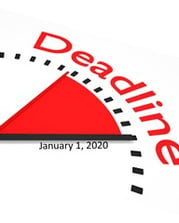 We’ve been repeating this message for several years: Upgrade now, please don’t wait until the last minute; the deadline isn’t going to change, and parts and labor prices are not going to drop. We really want to reiterate that there are no magic bullets on the horizon for your ADS-B upgrade. The OEMs have spent millions of dollars developing solutions for their platforms, and they aren’t going to develop anything with a lower cost or that’s easier to install in the final months before the deadline. In fact, most vendors have already announced price increases for this year and next.




 Everyone at Duncan Aviation laughed along with most of the rest of the business aviation industry on April Fool’s Day when the spoof press release claimed the deadline for the Automatic Dependent Surveillance-Broadcast (ADS-B) mandate had been extended until 2040. Not long after the laughter died down, though, the FAA reiterated that the agency’s deadline will not change, saying, “We have a sense of humor, too, but an April Fool’s joke that the FAA is extending the ADS-B deadline is just that.”
 Because time flies and aircraft without ADS-B probably won’t after the deadline, Duncan Aviation would like to remind its customers that the company has numerous certified paths to upgrade equipment to comply with the FAA’s ADS-B mandate. Duncan Aviation holds (or has access to) 42 STCs for dozens of aircraft models.


.jpg?t=1513285766908&width=100&height=125&name=Kruce,%20Scott%20(Small).jpg)


 DOM Greg Donegan, at Cincinnati, Ohio-based Cin-Air, had an inspection due on a G-200 in October 2016. While it was down, he had the Duncan Aviation techs from the Satellite Shop at Lunken Field in Cincinnati cross the ramp from their hangar to his and upgrade the G-200’s avionics equipment for ADS-B.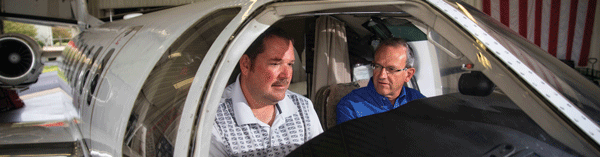
.jpg?width=275&name=IMG_8278%20(Mobile).jpg "IMG_8278 (Mobile).jpg")




.jpg?width=273&name=IMG_8278%20(Mobile).jpg) Duncan Aviation has a network of 26 Satellite Avionics Shops and work-away stations located at the busiest airports in the United States. Each shop has knowledgeable, experienced avionics technicians who have already brought dozens of aircraft into compliance with the ADS-B mandate.
Duncan Aviation has a network of 26 Satellite Avionics Shops and work-away stations located at the busiest airports in the United States. Each shop has knowledgeable, experienced avionics technicians who have already brought dozens of aircraft into compliance with the ADS-B mandate.