Subscribe by Email

Your email:

The Duncan Download Blog: Business Aviation Advice & Observations

Current Articles | RSS Feed RSS Feed

Hawker Aircraft Main Entry Door Operation­


Contributed by Dave Ungvarsky, Airframe Tech Rep

The Main Entry Door on Hawker aircraft is durable and very reliable. And by adding these basic operational measures, you will ensure years of continued problem-free service.

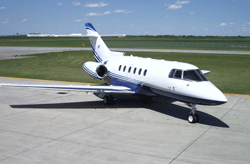
Hawker Main Cabin Door

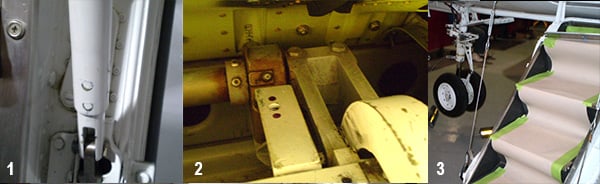
1) Door Stay with loose rivets, 2) Entry door lever and shaft, 3) Door Maintenance Cables

Lubrication

In addition to normal door lubrication, the top and bottom door stay and hinge shaft linkages deserve some attention. Make it a point to keep them lubricated and clean.

Door Support Cables

The use of door support cables during servicing and maintenance will go a long way in reducing wear in the door stays and hinge shafts.

One Person at a Time

The policy of allowing only one passenger on the steps while entering or exiting the aircraft will also help in reducing wear.

There are several areas on the Main Entry Door where we have found wear, these include elongated bolt holes in the entry door lever to the entry door shaft and loose rivets in the door stay top and bottom tubes and fork end. Repairs for these items can be found in the Structural Repair Manual. Loose rivets and elongated bolt holes can be readily detected by applying weight to the last step and observing the amount of movement and its location. Prompt detection and repair will reduce the likelihood of costly parts replacement.

Duncan Aviation is still a Hawker Service Center

In light of the recent changes in the industry for Hawker operators, I want to remind you that Duncan Aviation continues to provide comprehensive Hawker aircraft service and support at all Duncan Aviation locations around the world. We are an industry leader in Hawker maintenance, structural repair, landing gear/component overhauls, engine MPIs, avionics upgrades, paint and interior. Our experience and capabilities are second to none. For more information about your options as a Hawker operator, contact any one of the many Duncan Aviation Hawker experts

Dave Ungvarsky is an Airframe tech rep located at Duncan Aviation's Lincoln, NE, location, specializing in the Hawker aircraft. His aviation career began in 1978.

For more updates from Duncan Aviation, please follow us on Twitter and become a fan on Facebook.

Hawker 125: Commonly Exchanged Aircraft Parts


Darrell Cermak, Rotable Inventory Manager

Duncan Aviation Parts & Rotables Sales has built and maintained one of the largest business aircraft parts inventory in the industry. Our team of aviation professionals has the experience, contacts and connections to identify and secure some of the hardest to find business aircraft parts.

Because of our long history and experience with the Hawker aircraft, we know the most commonly exchanged parts and keep an inventory available to meet customer needs.

Below are some of the more commonly exchanged life-limited parts on a Hawker 125 airframe that have been known to not make the next Time Before Overhaul (TBO).

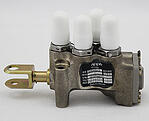
Sequence Valve Air48540-1

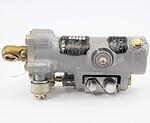
Sequence Valves (AIR48540-1)

Sequence valves are required Overhaul items and have to be overhauled at the required Chapter 5 Interval. However, sometimes they do not make the TBO due to seal failure and contamination of the hydraulic fluid, leading to internal slide and sleeve failure.
Starter Generator

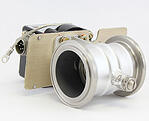
Starter Generators (23080-005 & -064)

Starter generators are exposed to a lot of abuse while operating in a constantly vibrating environment with lots of heat. These conditions over time take their toll, leading to problems, such as not coming on line, unable to be paralleled and premature brush wear.
Maxarets

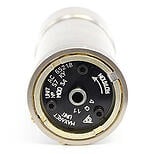
Maxarets (AC65216 & AC65218)

The Hawker 125 series aircraft utilizes an axle-mounted Maxaret to control skid conditions. It is a required overhaul item and needs to be removed at the necessary intervals. It is not uncommon for valve wear and seal failure to cause leaking, requiring removal before TBO. When removing Maxarets, be sure to use the proper Maxaret extraction tool and procedures to avoid unnecessary damage and expensive overhaul costs.
Valve Refrig Bypass (104968)

Valve Refrig Bypass (104968)

The aircraft uses this bypass valve to regulate cabin temperature to the desired setting. Due to ever-changing cabin temperatures, this valve is always opening and closing. Failures such as inop, slow to operate and does not modulate result in unwanted cabin temperature ranges.
 AIR46520 2

Airbrake Actuator (AIR46520-2 & 21-2)

Just like the sequence valves, the Airbrake Actuator is a hydraulic unit with many seals. These seals have been known to fail before the next required overhaul interval and may cause the unit to be exchanged earlier.

Parts & Exchanges

 Duncan Aviation is constantly adding to its inventory to ensure customers have a true one-stop shop when it comes to acquiring parts or exchange units. Search our on-line inventory for aircraft parts and inventory availability or chat live with a Parts & Rotables Sales Rep. Our international business aircraft components solutions experts are available 24/7/365 and can handle any business aircraft system problem with immediate parts exchanges.

Duncan Aviation is still a Hawker Service Center

 In light of the recent changes in the industry for Hawker operators, I want to remind you that Duncan Aviation continues to provide comprehensive Hawker aircraft service and support at all Duncan Aviaiton locations around the world. We are an industry leader in Hawker maintenance, structural repair, landing gear/component overhauls, engine MPIs, avionics upgrades, paint and interior. Our experience and capabilities are second to none. For more information about your options as a Hawker operator, contact any one of the many Duncan Aviation Hawker experts.

Darrell Cermak is a Rotable Inventory Manager located at Duncan Aviation’s Lincoln, Nebr., facility. He specializes in the Hawker 125 and Falcon airframes. His aviation career began in 1995.

For more updates from Duncan Aviation, please follow us on Twitter and become a fan on Facebook.

Proper Hawker Maxaret Removal


Contributed by Jerry Cable, Accessory Tech Rep

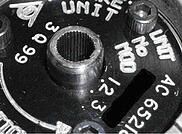
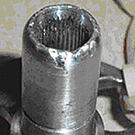
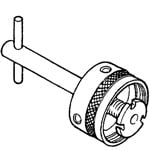
MaxaretMaxaretMaxaret DamageMaxaret Tool

Click images to enlarge

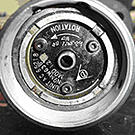
The Hawker 125 series business aircraft utilizes an axle-mounted Maxaret to control skid conditions. The Maxaret is installed in the axle and is driven by a small splined shaft in the hubcap. These units are required overhaul items and need to be removed at the necessary intervals. To avoid potential bill backs or high overhaul costs, it is recommended that the proper tooling and procedure for removal be followed.

The Maxarets are held in place with a retaining nut in the axle. Dirt, debris and rust can also collect in this area creating a tight seal and snug fit. It is tempting to grab a hold of the shaft of the Maxaret with a pair of pliers to yank it free, but doing so will cause damage to the shaft of the Maxaret.  The damage could result in the need to replace the shaft if the drive cap can not be installed due to damaged gear teeth. The cost to replace this part is estimated at about $2000.

To prevent unnecessary damage, loosen the nameplate bolts and use the special extraction tool engaged under the heads of the bolts. See photo 3. Using this procedure only takes a few extra minutes, but will prevent any damage to the shaft of the Maxaret, avoiding added expense. The Maxaret installation and extraction tool can be purchased from Hawker Beechcraft (part number A125529).

Duncan Aviation provides accessory unit repairs and overhauls for the most popular business aviation airframes. We work on tens of thousands of accessory units providing some of the fastest turntimes in the industry and the highest quality of repairs and overhauls.

Search our accessory capabilities.

Jerry Cable is an Accessories Tech Rep located at Duncan Aviation’s Lincoln, Nebr., facility. He is a landing gear and accessory components and systems specialist. His aviation career began in 1991.

For more updates from Duncan Aviation, please follow us on Twitter and become a fan on Facebook.

Areas of a Hawker Business Aircraft that are Susceptible to Corrosion


Contributed by Dave Ungvarsky, Airframe Tech Rep

Steel fastener corrosion

Steel fastener corrosion on the upper surface skin of the wing.
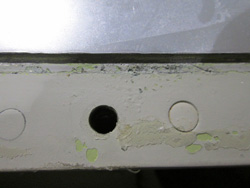
Leading edge corrosion

Example of leading edge corrosion after TKS panels have been removed.
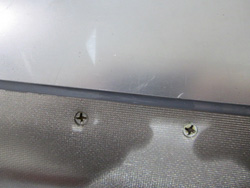
Properly Leading edge

Properly sealed wing leading edge TKS panel.

All aircraft are vulnerable to corrosion due to environmental conditions and the quality of maintenance. The Hawker 125 series is no different, but added vigilance is needed due to its use of TKS Fluid. The condition of protective coatings and paint along with proper maintenance procedures will ensure that corrosion will be kept in check, and additional maintenance costs can be avoided. A thorough eye during a pre/post-flight inspection can detect and prevent several corrosion issues.

Below are three areas of a Hawker aircraft that are susceptible to corrosion and should be visually inspected on a regular basis.

Wing Surface

The condition of the paint on the upper and lower wing surfaces is an area of concern. Hawker aircraft use steel fasteners and if the protective finish/paint is not well maintained on these fasteners, they can corrode and require repair, per a Structural Repair Manual procedure, or replacement.

Replacing these fasteners requires entering the wing, which, in some circumstances, may result in fuel leaks. The wing skin around the fastener can also corrode and get real expensive real quick requiring engineering help from the manufacturer for a repair scheme.  

Joints

On Hawker 800 or newer aircraft, the joint between the TKS panels and the leading edges are sealed with a filling compound. It is critical to maintain this area to prevent leading edge rebate corrosion. Any indication of cracked or missing filler should be immediately addressed and repaired. If the rebates are allowed to continue to corrode, it will require repair. If left for too long, it will also require engineering help to develop an approved repair.

Trim Tab Rod Ends

Are you applying the appropriate silicone lubricant (Dow Corning 111) on the trim tab rod ends as spelled out in the Hawker Maintenance Manual? If you are not, you run the risk of TKS fluid entering and corroding the bearing. And if the bearing becomes corroded, it requires replacing. Corrosion is detected by the appearance of a rust colored streaking aft of the trim tab rod ends. The elevator trim rod ends appear to be the most susceptible. However, by the time you see this streaking it is too late. The rod end is already corroded and needs to be replaced. This is not a high dollar item compared to the others but an added expense that could have been prevented. 

You can't prevent all corrosion, but it can be kept to a minimum when caught early with preventive methods such as careful pre/post flight inspections and prompt remedial action. Feel free to contact me anytime for more information about corrosion detection/prevention methods or any other Hawker technical questions.

Duncan Aviation is a business aviation maintenance, repair and overhaul (MRO) facility with a long history servicing the Hawker aircraft. We have comprehensive capabilities on all Hawker models.

Dave Ungvarsky is an Airframe tech rep located at Duncan Aviation's Lincoln, NE, location, specializing in the Hawker aircraft. His aviation career began in 1978.


For more updates from Duncan Aviation, please follow us on Twitter and become a fan on Facebook.

Hawker 800XP: Troubleshooting HF Systems Squawks


Contributed by Scott McKenzie, Avionics Tech Rep

Hawker 800XP

If your Hawker 800XP's HF system is showing signs of intermittent faults, the solution may be as simple as checking for proper bonding at the antenna and antenna coupler.

A Hawker 800XP operator, who was experiencing a squawk on both #1 and #2 HF systems, recently contacted us for support. He was not able to receive transmissions on either system.

Since both systems were exhibiting the same symptoms, the obvious place to begin troubleshooting is by focusing on components that are common between the #1 and #2 HF systems. In this instance: the dual KHF-950 HF system with a shunt antenna. The common components are the KA 162 Dual External Capacitor (or KA 160 Dual Antenna Adapter, if it is a long wire antenna installation) and the HF antenna itself.

Proper Antenna Bonding

The function of the KA 162 Dual External Capacitor is to connect the antenna to the active antenna coupler. Since the HF antenna in this installation is essentially the vertical stabilizer leading edge, the one thing to check with the antenna is proper bonding. Good bonding of the antenna, KAC 952 Power Amplifier/Antenna Coupler and KA 161 External Capacitor or KA 162 Dual Antenna Capacitor is essential for proper operation of the HF system. I cannot count the number of HF squawks that have been remedied by Duncan Aviation avionics technicians simply by going through and cleaning corroded bonding connections at the antenna or antenna coupler.

Tuning faults are also a common squawk for HF systems that have corroded or poor bonding at the antenna or antenna coupler. Bonding at the antenna coupler is done with a bonding strap, and the resistance should not exceed .003 ohms.

So if your aircraft's HF system begins to show signs of intermittent faults, take a few minutes to first check for proper bonding at the antenna and antenna coupler. Many times, this can remedy the problem and save you time and money in the process.

Duncan Aviation is still a Hawker Service Center

In light of the recent changes in the industry for Hawker operators, I want to remind you that Duncan Aviation continues to provide comprehensive Hawker aircraft service and support at all Duncan locations around the world. We are an industry leader in Hawker maintenance, structural repair, landing gear/component overhauls, engine MPIs, avionics upgrades, paint and interior. Our experience and capabilities are second to none.

For more information about Duncan Aviation’s Hawker Services, contact any one of the many Duncan Aviation Hawker experts.

If you have any questions or need assistance when troubleshooting a KHF-950 HF system, contact Duncan Aviation's Avionics Tech Reps, available 24 hours a day, every day.

  Avionics Tech Reps

Scott McKenzie is an avionics tech rep located in Duncan Aviation's Lincoln, Nebraska, facility. He specializes in troubleshooting the latest in avionics systems installed on aircraft today. His aviation career began in 1995.

For more updates from Duncan Aviation, please follow us on Twitter and become a fan on Facebook.

Should Hawker Beechcraft Retain Duncan Aviation as an ASC?


Contributed by Dan Fuoco, Airframe Maintenance Service Sales Rep.

H800XP

Duncan Aviation was founded as a Beechcraft Distributorship in 1956 and was literally built by serving the Hawker Beechcraft customer.

Dear Hawker Operator:

Let me make one thing clear.

Duncan Aviation continues to provide comprehensive Hawker aircraft services and support for all operators around the world.

However, recently Hawker Beechcraft has decided to end our 13 year partnership by not renewing our Authorized Service Center Agreement for our Lincoln, NE, facility. It goes without saying we are disappointed. Several Hawker operators, who rely on Duncan Aviation’s technical expertise and experience, have come to me personally and expressed their frustration with Hawker Beechcraft’s decision.

Share Your Opinions

Individually we have opinions, but collectively we can have a powerful voice. If you, as a Hawker operator, feel that Hawker Beechcraft should retain Duncan Aviation as an Authorized Hawker Service Center, contact your Hawker Beechcraft Representative asking them to reconsider their decision.

Or you can download this letter addressed to Hawker Beechcraft and complete it to express your support. Email or fax it to me no later than July 31, 2012; whereupon, I will forward all letters to Hawker Beechcraft for their consideration.

14 Years of Hawker Authorized Services

Since 1999 Duncan Aviation has been a Hawker Authorized Service Center providing tip-to-tail maintenance services to every Hawker make/model aircraft. We are an industry leader in maintenance, structural repair, landing gear/component overhauls, engine MPIs, avionics upgrades, paint and interior. Our experience and capabilities are second to none.

Duncan Aviation was founded as a Beechcraft Distributorship in 1956 and was literally built by serving the Hawker Beechcraft customer. We have a long relationship with the Hawker Beechcraft family of aircraft, as well as their operators.

To find out about our continued Hawker capabilities and services, feel free to contact me any time.

I remain always at your service.

Sincerely,

Dan Fuoco

Dan Fuoco serves as an Airframe Maintenance Service Sales Rep. specializing in Hawker aircraft at Duncan Aviation's Lincoln, Neb. (LNK) full-service facility. He began his aviation career in 1974.

For more updates from Duncan Aviation, please follow us on Twitter and become a fan on Facebook.

Duncan Aviation Technicians Travel the World in 2011


In 2011, Duncan Aviation team members made hundreds of trips around the world providing AOG services. While providing the most-needed AOG services to our customers on nearly every Continent, team members also took in some local culture, food and sites.

Berlin, Germany

Berlin, Germany

In March, Scott Shefke, Challenger/Global Tech Rep, traveled to Berlin,Germany, to perform and assess the viability of restoring a Challenger CL 604 to airworthiness status. The project included performing engine boroscopes, performance runs, system operations checks, fuel sampling and general condition of aircraft.

“Berlin is a magnificent city to visit,” says Scott. “It is rich with history.”

Cairo, Egypt

Cairo, Egypt

In Cairo, Egypt, Dan Soderstrom, Master Turbine Engine Mechanic, and Bill Walker, Engine Tech Rep, were in the right place at the right time when one project turned into two. While troubleshooting a faulty fuel control unit on a Hawker 800XP, a local Hawker 850XP operator approached them for assistance in fixing leaking starter/generator seals.

Both Dan and Bill said that everyone they had contact with in Egypt were very nice and helpful. Dan hopes to have more opportunity to see the great city if he gets the chance to go in the future.  

Bordeaux, France

St. Emilion, France

Ron Grose, Falcon Tech Rep, attended the annual Falcon 7X Steering Committee meeting in May, in Bordeaux, France, a beautiful old city located in southwestern France along the Garonne River, surrounded by elite vineyards. As a member of the steering committee, Ron and others oversee the development of the scheduled maintenance program for the Falcon 7X aircraft.

One of Ron’s favorite places to visit was the small village of Saint Emilion. It is a 1,700 year old village which was, at one time, surrounded by a large moat used for protection against the warring tribes. This quaint village had narrow cobblestone streets, great restaurants and many wine tasting shops.

Brisbane, Australia

Brisbane, Australia

Duncan Aviation Fuel System Lead Technician, Jon Abrahamsen, took a week long trip to Australia in May. He was dispatched to repair a wing junction plate fuel leak on a Falcon 2000EX.

Jon used one of his days to drive two hours down to Surfers Paradise, a large tourist beach. He also took the train downtown to the south shore for dinner and a couple of local beers. Jon says the area was beautiful.

Shanghai, China

Shanghai, China

Scott Howell, Airframe Lead Mechanic, along with three other fellow Duncan Aviation team members, traveled to Shanghai, China to complete a crucial fix on a Falcon 7X. Getting tools and equipment through customs posed a challenge, but the team stuck to the task, completing the project early.

On the first full day of their trip, the group made their way to The Bund, a mile long street lined with shopping. A local gentleman led them beyond the glamour of these stores to another area. Here, they had the adventure of walking up steep wooden stairs, entering into random people’s homes, where they bargained with local merchants for various items. It is an experience they will not soon forget. Scott describes the city’s transportation as very convenient and clean. The food was not what he would have suspected, but enjoyed trying the various delicacies of the region. 

Santo Domingo, Dominican Republic

Ned Shanks, Engine Rapid Response Tech out of Fort Lauderdale, FL, made a trip to Santo Domingo, Chile, in October to assist a customer. The #1 engine on their Lear 35 would not start. Having seen this squawk many times before, Ned suspected there was an issue with the aircraft’s igniter box and prepared for his trip with this in mind. This was a very important job because the aircraft was an air ambulance and was scheduled to fly a sick infant back to the United States for medical care.

After arriving, clearing Customs and making it to the aircraft, Ned quickly discovered his suspicions were correct, a failed igniter box. As soon as he complied with the removal and replacement of the box, ground runs and required paperwork, they were airborne and on their way back to Ft. Lauderdale. Shortly after arrival back home, the aircraft was prepped and sent out on another rescue mission.

For more updates from Duncan Aviation, please follow us on Twitter and become a fan on Facebook.

Avoid Hawker Landing Gear Exchanges During Maintenance Events


Contributed by Dan Fuoco, Hawker Airframe Service Sales Rep.

Hawker Landing Gear

Hawker roll-around nose landing gear (NLG) and main landing gear (MLG) used to keep aircraft moving through maintenance.

I’ve worked with Hawker maintenance events for a long time, and I make it my business to make sure everything is in place for an aircraft to deliver on time (if not ahead of schedule). It’s common knowledge that combining Hawker landing gear overhauls with scheduled maintenance and paint saves downtime. What isn’t commonly known is a simple piece of equipment can reduce that downtime by another few weeks.

That piece of equipment is called a roll-around landing gear, which serves as a temporary stand-in for the original gear when it goes in for overhaul during a combined maintenance event.

Roll-Around Landing Gear

Typically, a maintenance event will finish weeks ahead of a landing gear overhaul. Since an aircraft can’t be painted without a landing gear, operators typically have two options: let the aircraft sit for two weeks while the original gear is overhauled, or exchange the gear for another unit. A roll-around landing gear presents a third, more efficient option.

When an aircraft arrives for maintenance, the original landing gear can be immediately replaced with the roll-around gear. This allows the aircraft to be moved through all phases of maintenance, including paint, while the original gear is overhauled. When the aircraft paint process is finished, the original landing gear is usually ready for reinstallation.

2 Weeks of Downtime Savings

I strongly recommend that operators choose a Hawker service center that has roll-around landing gear, especially when planning for a combined maintenance event. Operators will probably save about two weeks of downtime if they work with a service center that has roll-around landing gear available.

Roll-around landing gear are available at Duncan Aviation for all series of Hawker aircraft; Challenger 600s, 601s and 604s; and Falcon 50s, 900s and 2000s. Duncan Aviation has a Hawker Authorized Service Center, and a Hawker-authorized accessory shop for landing gear overhauls in Lincoln, NE (LNK). Please contact me, Dan Fuoco, or a member of Duncan Aviation’s Hawker team for more information.

Dan Fuoco serves as a Airframe Service Sales Rep. at Duncan Aviation’s full-service facility in Lincoln, NE (LNK), specializing in Citation and Hawker aircraft. He started his aviation career in 1974.

For more updates from Duncan Aviation, please follow us on Twitter and become a fan on Facebook.

Accessing the Hawker 800 Avionics Bay Without Recertifying RVSM


By Dan Fuoco, Airframe Service Sales Rep.

hawker avionics nose bay access

Rotating avionics boxes will make them accessible from the nose wheel bay, avoiding RVSM recertification issues for Hawker 800 series aircraft.

Picture yourself on a trip, in the middle of nowhere, and you have to open the nose avionics bay access panels on your Hawker 800/800XP series aircraft. You’re at a field with limited or no service available, and you can’t open the access panels without recertifying RVSM. Now you’re stuck. Your only option is to fly out well below RVSM-approved flight levels.

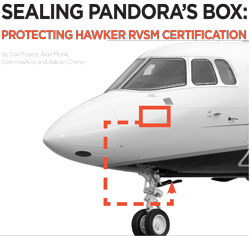
For Hawker 800 series aircraft, the avionics bay door panels are located in the RVSM critical area. If these panels are disturbed, the critical area will have to undergo a recertification. Typically, these access panels are opened only as necessary. Also, just as typical, when these panels are opened the aircraft is in the worst place at the worst time. The only way to avoid disturbing the RVSM critical zone is by making the avionics boxes accessible through the nose wheel bay.

In this modification, the avionics boxes are rotated and the avionics shelves are modified to tilt down for box removal from the nose wheel bay. The avionics panels are permanently sealed and painted so you can’t tell they were ever there.

The modification can pay for itself very quickly, and can be completed in about one week. Although it requires repainting the entire nose section, you’ll be able to access the avionics nose bay without disturbing the RVSM critical area ever again.

The STC for this modification is only available at Duncan Aviation.

For more information, download the Duncan Aviation Field Guide to Protecting Hawker RVSM Certification.

Dan Fuoco is an Airframe Service Sales Rep. at Duncan Aviation's Lincoln, Neb. (LNK) facility, and specializes in airframe services for Hawker and Citation aircraft. He began working in aviation in 1974.

For more updates from Duncan Aviation, please follow us on Twitter and become a fan on Facebook.

How to Avoid Hawker Landing Light Maintenance Problems


Contributed by Dan Fuoco, Airframe Service Sales Rep.

hawker boombeam landing lights

Deciding whether the melted lens maintenance headache is worth the cost of the cure depends on how much the issue impacts your operation.

Photo courtesy of LoPresti and Jose Gibert.

It’s common knowledge that the original equipment landing lights can be a frequent source of frustration for Hawker operators. If left on for too long, heat buildup from inside the lens can cause the lenses to melt.

Filament lamp technology was a standard for Hawker aircraft until a few years ago, when a mercury/xenon gas lamp was developed by LoPresti. These “BoomBeam” landing lights are now standard equipment for newer, out-of-production Hawker aircraft.

Filament lamp technology is prone to overheating, vibration and shock. Customers have reported that lens melting can begin after only a few minutes of operation. After several melting events, the problem will become very noticeable. The lens will begin to look discolored, and over time the lens contour can become physically distorted.

To repair or replace a landing light lens can be costly. Some lenses, if still within limits, can be overhauled while others will need to be replaced.

The only way to avoid these issues entirely is by switching to the new lamp technology. The LoPresti Hawker BoomBeam landing light kit won’t overheat, is more resistant to vibration and shock, and is much brighter. However, the upgrade also costs around $16,000 and takes about five days to complete. It consists of a power supply, shielded high-voltage wire harness, plug-in HID lamp, mounting hardware and lens reflector assemblies.

Deciding whether the maintenance headache is worth the cost of the cure depends on how much the inconvenience impacts your operation. Those who have them love them, but if you can limit the use of landing lights to only a few minutes and don’t mind an occasional replacement, it might serve your interests just as effectively.

Dan Fuoco is an Airframe Service Sales Rep. at Duncan Aviation's Lincoln, Neb. (LNK) facility, and specializes in airframe services for Citation and Hawker aircraft. He began working in aviation in 1974.

For more updates from Duncan Aviation, please follow us on Twitter and become a fan on Facebook.

All Posts